From fundamental principles to scalable processes
The Materials Research Knowledge Center (MRKC) is a practical resource for researchers, engineers, and technology developers working at the intersection of materials science, process engineering, and laboratory automation.
Explore the scientific principles behind important materials-processing techniques, compare different methods, understand common process challenges, and learn how laboratory discoveries can be translated into reliable and scalable manufacturing workflows.
Explore the Knowledge Center
Start with Thin-Film Deposition
Understanding materials means understanding processes
The performance of an advanced material depends on more than its chemical composition. How it is deposited, dried, treated, structured, and integrated into a device can be just as important as the material itself.
Small changes in process conditions can influence:
- Film thickness and uniformity
- Crystal structure and grain formation
- Electrical and optical properties
- Adhesion and mechanical stability
- Device performance and lifetime
- Process reproducibility and manufacturing yield
The MRKC examines these relationships in a clear and technically grounded way. It connects fundamental concepts with practical process considerations, helping readers understand not only how a method works, but also when to use it, which parameters matter, and what can go wrong.

What you will find in the MRKC
Foundational knowledge
Clear introductions to the scientific principles, terminology, and physical mechanisms behind materials-processing technologies.
Process and equipment guides
Detailed explanations of individual methods, including how they work, which parameters control the result, and which equipment configurations are commonly used.
Method comparisons
Practical comparisons that help researchers select the most appropriate technique for a particular material, substrate, application, or development stage.
Troubleshooting and process optimization
Guidance on common defects, possible causes, and the process variables that can be adjusted to improve quality and reproducibility.
Application-focused insights
A closer look at how materials-processing methods are used in fields such as photovoltaics, batteries, printed electronics, and other emerging technologies.
From laboratory research to scale-up
Insights into the transition from small-area experiments and manual processes to automated, reproducible, and manufacturing-relevant workflows.
Featured Knowledge Collection
Thin-Film Deposition
Thin films form the functional basis of many modern technologies, from solar cells and batteries to semiconductor devices, sensors, displays, and optical coatings. Their performance depends not only on the material being deposited, but also on how the wet or vapor-phase material is transformed into a uniform and functional solid layer.
The Thin-Film Deposition collection focuses primarily on solution-based processes, including spin coating, blade coating, slot-die coating, spray coating, and inkjet printing. It explains the physical principles behind each technique, the parameters governing film formation, and the trade-offs between laboratory simplicity, material efficiency, patterning capability, and industrial scalability.
The collection also examines the challenges shared by nearly all solution-based deposition methods:
- Achieving reliable wetting and complete substrate coverage
- Controlling wet- and dry-film thickness
- Managing solvent evaporation and drying kinetics
- Influencing crystallization and microstructure
- Preventing defects such as pinholes, dewetting, and thickness variations
- Maintaining uniformity and reproducibility
- Transferring processes from small substrates to larger areas
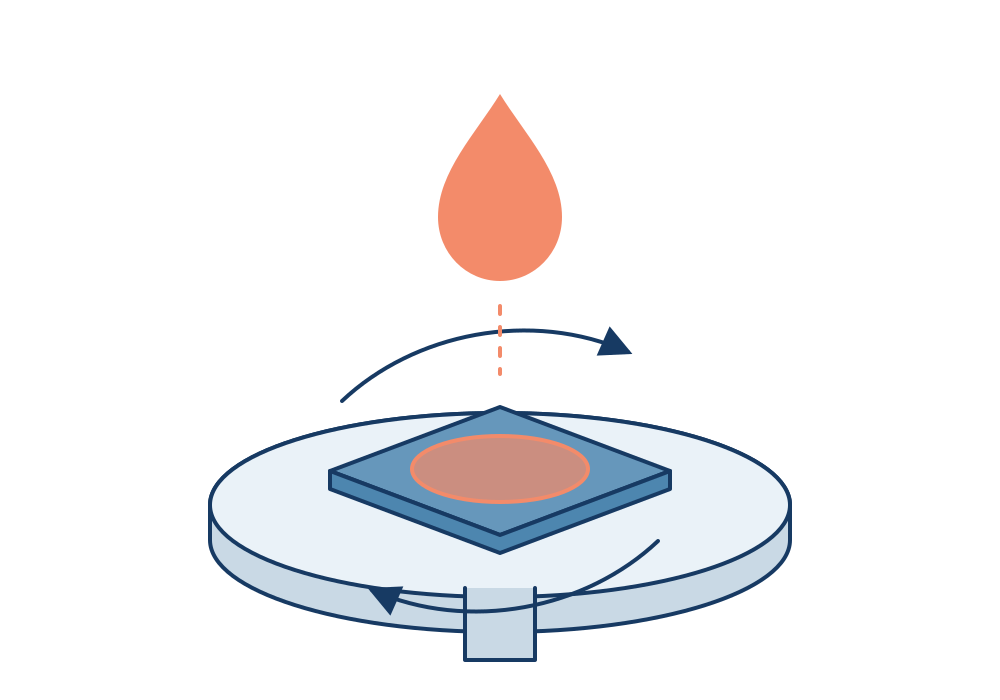
Spin Coating Explained
Learn how centrifugal spreading forms thin films and which variables determine the final thickness and uniformity.
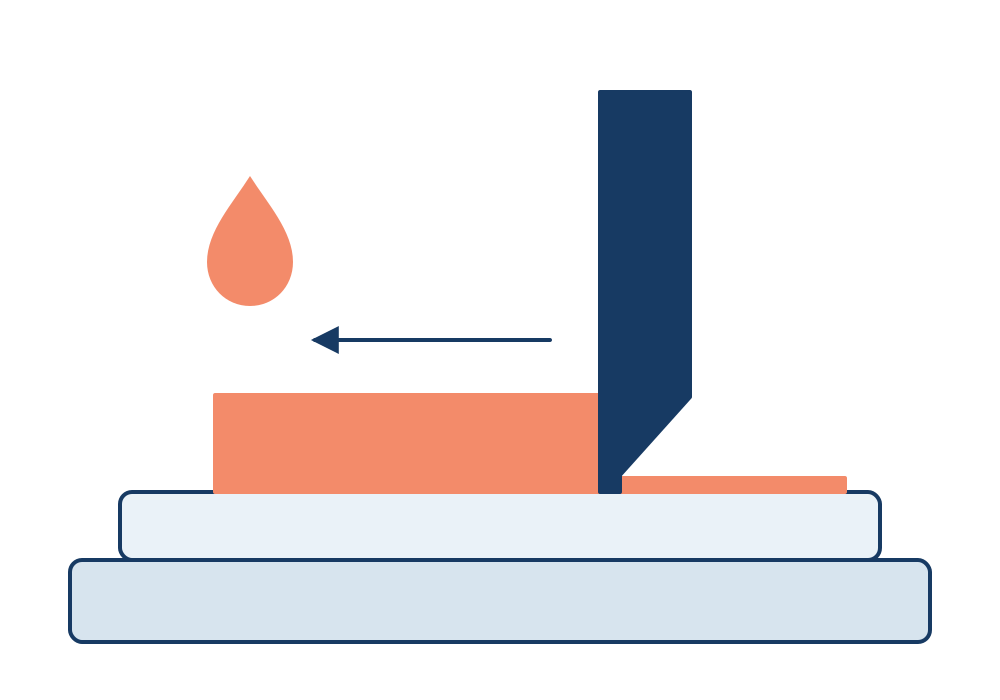
Doctor Blading Explained
Explore gap-controlled coating and its role as a simple, material-efficient method for laboratory research and process development.
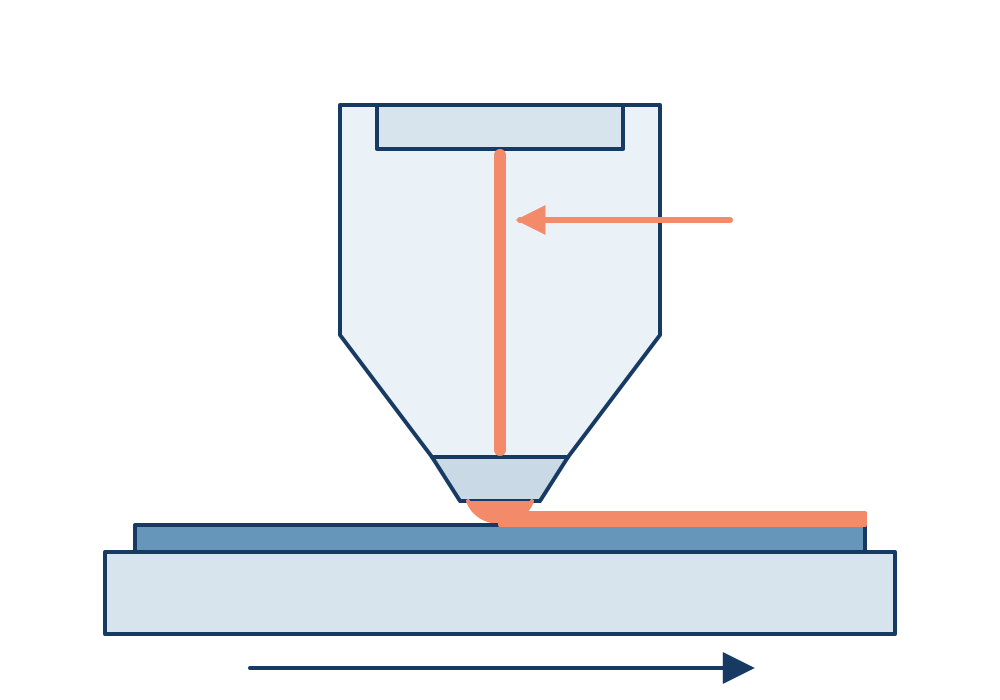
Slot-Die Coating
Understand precision-metered coating for scalable and continuous production processes.
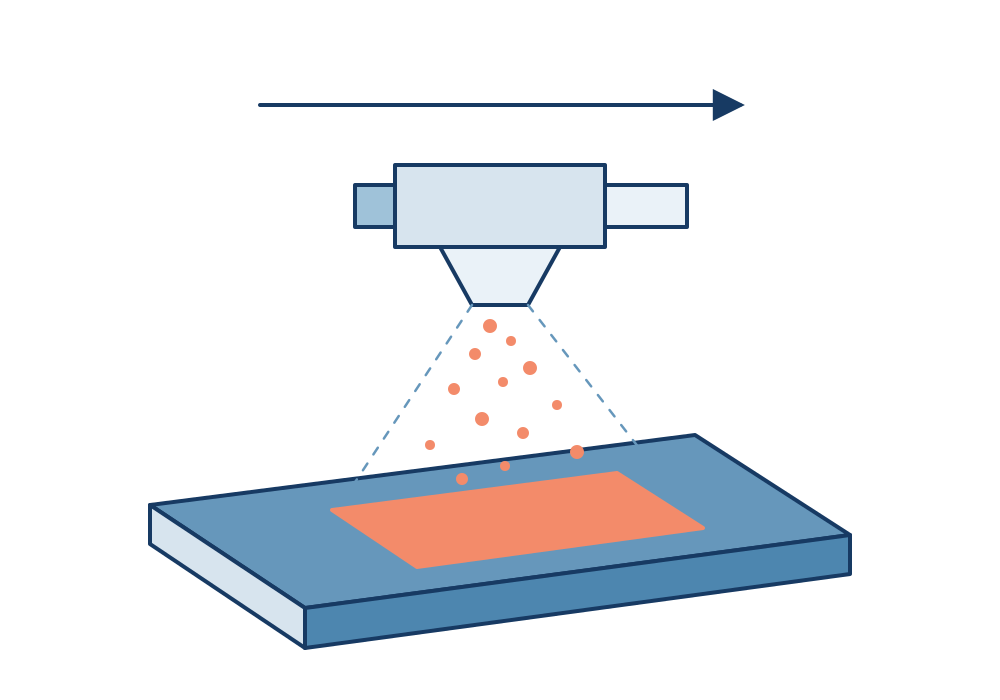
Spray Coating
Discover how atomized droplets can be used to coat large, textured, or non-flat substrates.
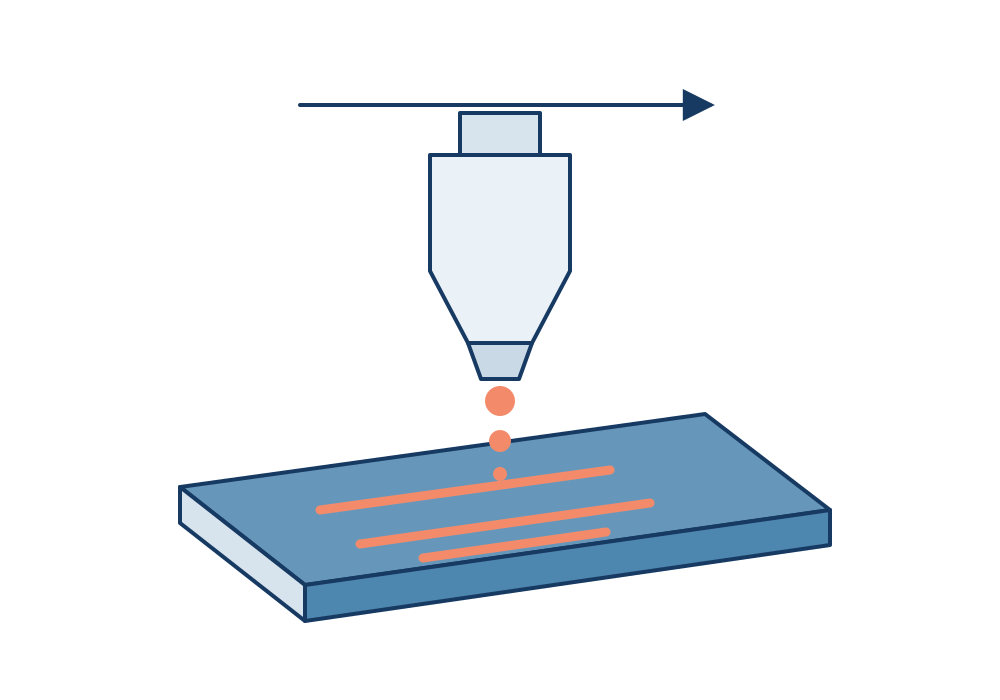
Inkjet Printing
Learn how digitally controlled droplets enable selective deposition, patterned films, and combinatorial materials research.
Comparisons and selection
Spin Coating vs. Doctor Blading
Compare two widely used laboratory-scale methods in terms of film quality, material consumption, process control, and scalability.
Choosing the Right Deposition Method
Use substrate geometry, ink properties, throughput, patterning requirements, and scale-up goals to identify a suitable process.
Applications
Thin-Film Deposition for Perovskites
Examine how coating and drying conditions influence crystallization, grain structure, defects, and photovoltaic performance.
Thin-Film Deposition for Batteries
Explore slurry coating, drying, and process control in the production of lithium-ion battery electrodes.
View All Thin-Film Deposition Articles
Built to support better research decisions
The MRKC is designed to help answer the practical questions that arise throughout materials development:
- Which process is suitable for my material and substrate?
- Which parameters have the greatest influence on the result?
- Why is my film uneven, rough, or poorly adhered?
- How can I improve experimental reproducibility?
- What changes when moving from manual coating to automation?
- Can a laboratory process be transferred to larger substrates or continuous production?
- Which measurements are needed to establish a reliable process window?
By bringing these questions together with the underlying science, the MRKC provides a structured starting point for designing experiments, evaluating technologies, and planning the next stage of process development.
Connecting scientific knowledge with practical implementation
SCIPRIOS works at the interface of materials research, process development, and laboratory automation. The Materials Research Knowledge Center reflects this interdisciplinary perspective by connecting scientific fundamentals with the practical realities of equipment, workflows, repeatability, and scale-up.
Whether you are investigating a new material, optimizing an established process, or preparing a laboratory method for automated production, the MRKC helps you move from understanding the principle to controlling the process.